Tattoo Case Study- Kenson
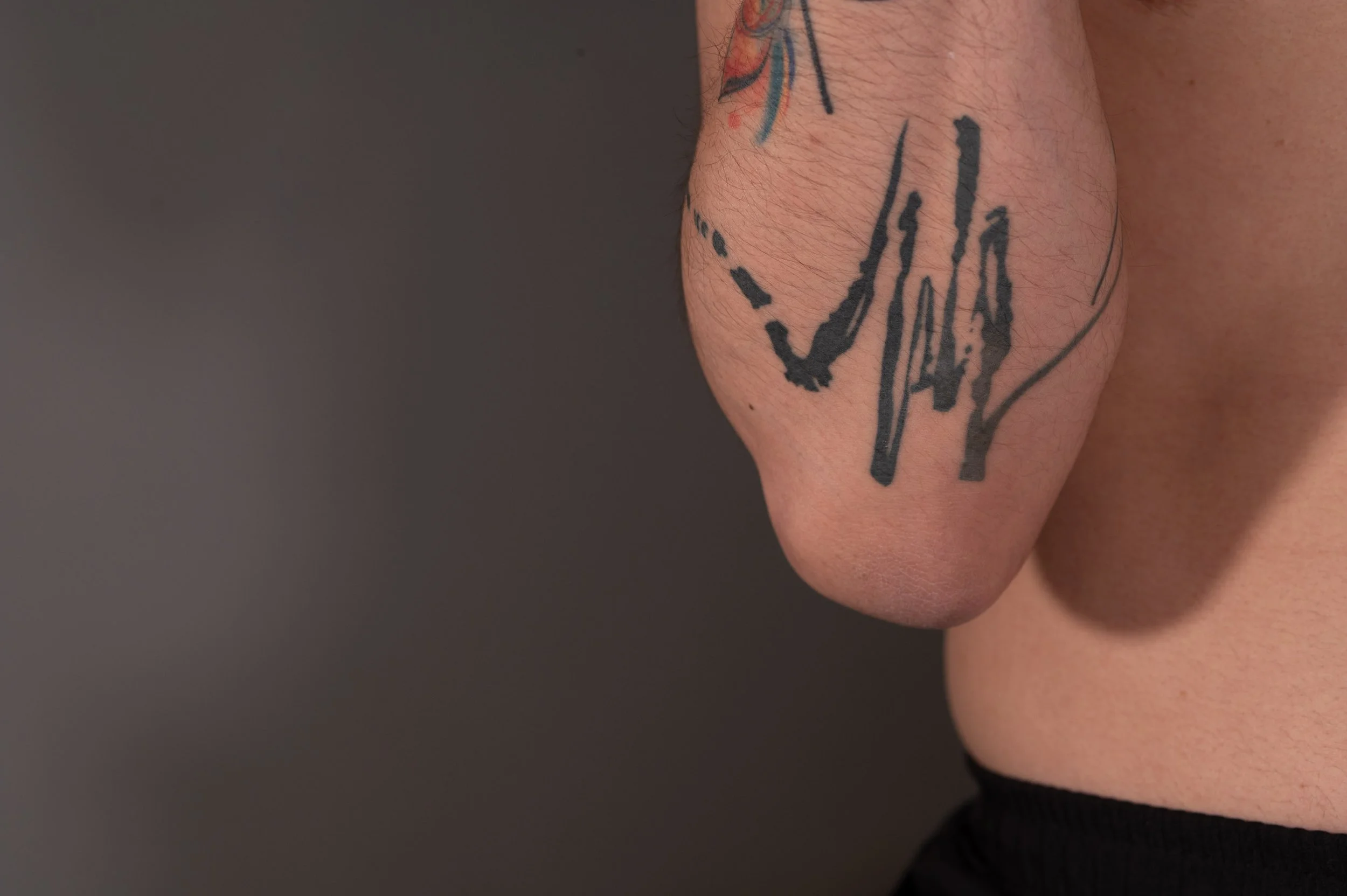
I first met Kenson in 2015 after I published my book <<墨子──紋身的背後>> in Hong Kong. After reading the book, he came to me, inspired to get his first tattoo. At that time, tattoo was still a taboo in the society of Hong Kong. Social stigma was strong, tattoo was still perceived as triad related. but time was changing, so in this book I showed the people of Hong Kong who we, the tattooed bunch, really were now. Kenson, a social worker, had always somehow felt trapped by conventional thinkings. While reading the book he realised that there were plenty of people out there who felt the same way, but in all kinds of different ways, he felt that tattoo can help express himself too.
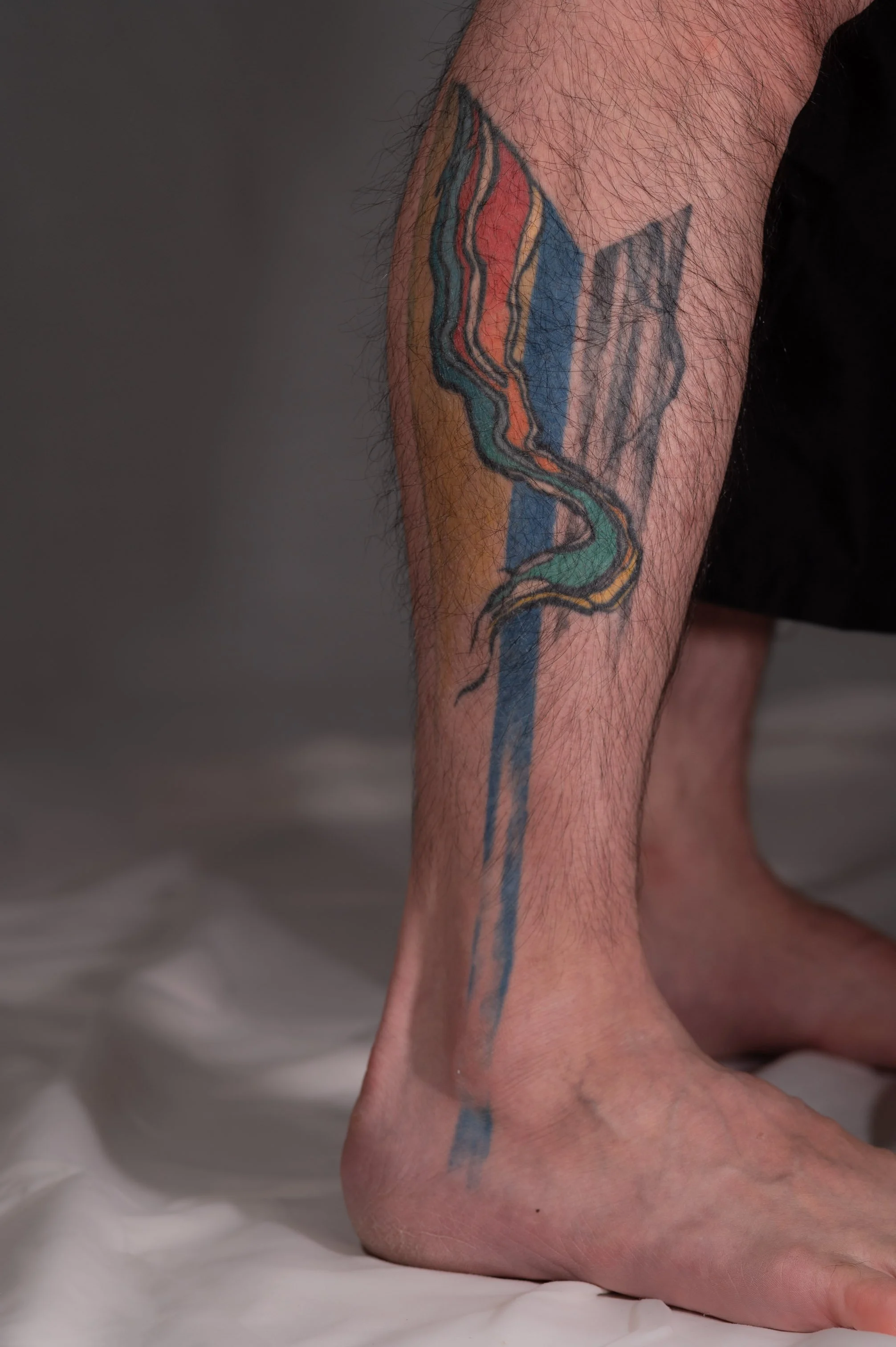
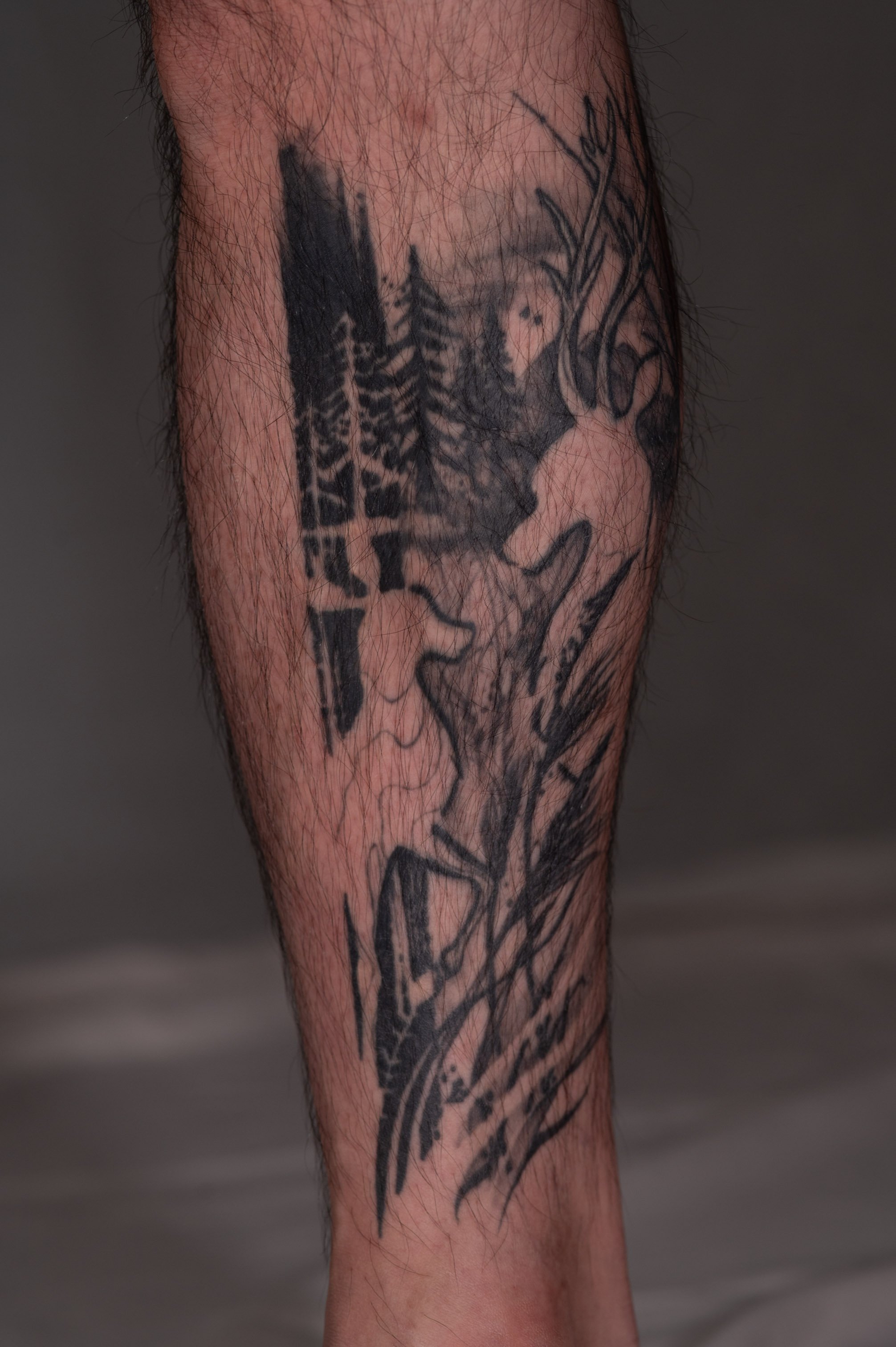
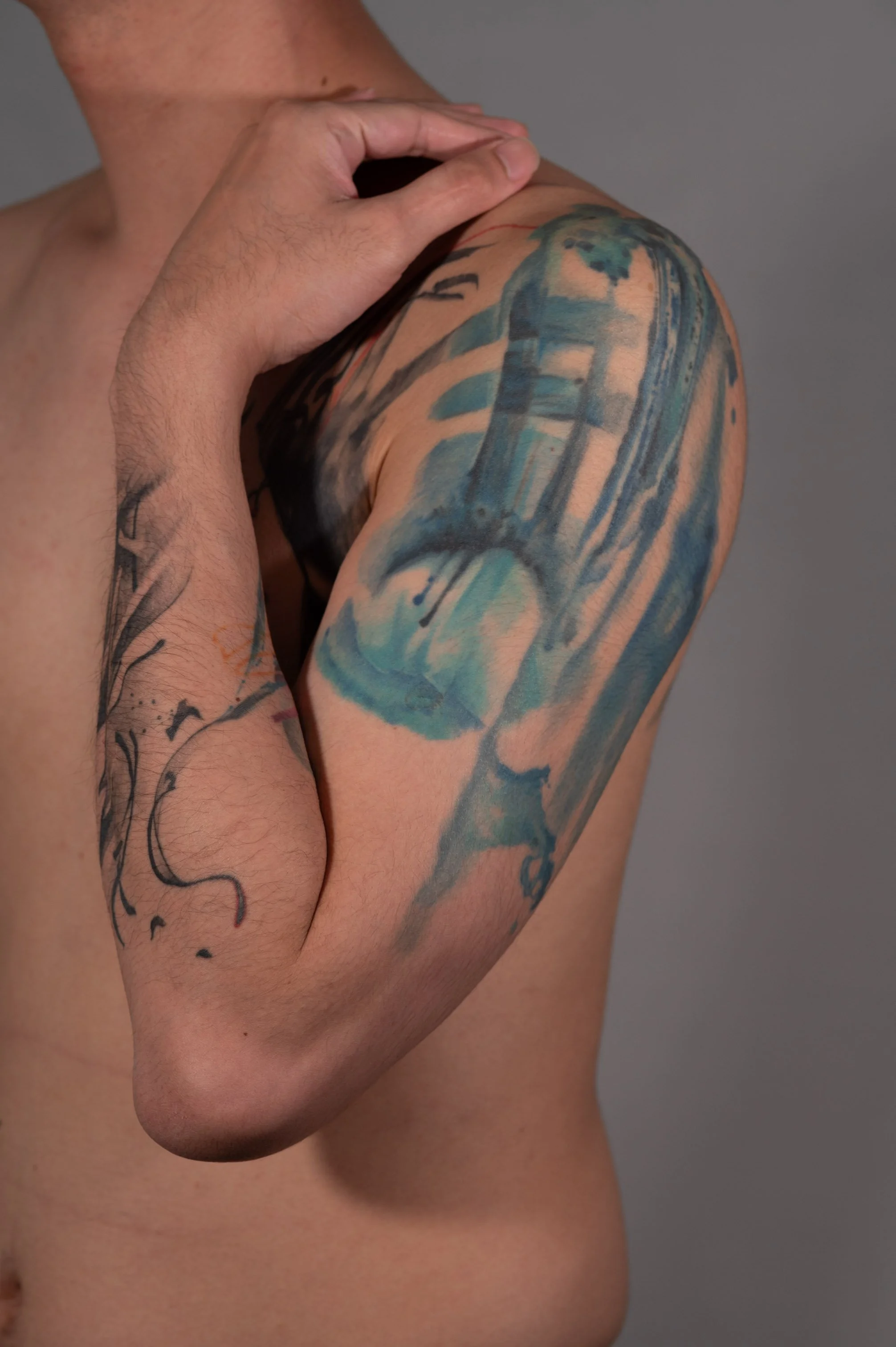
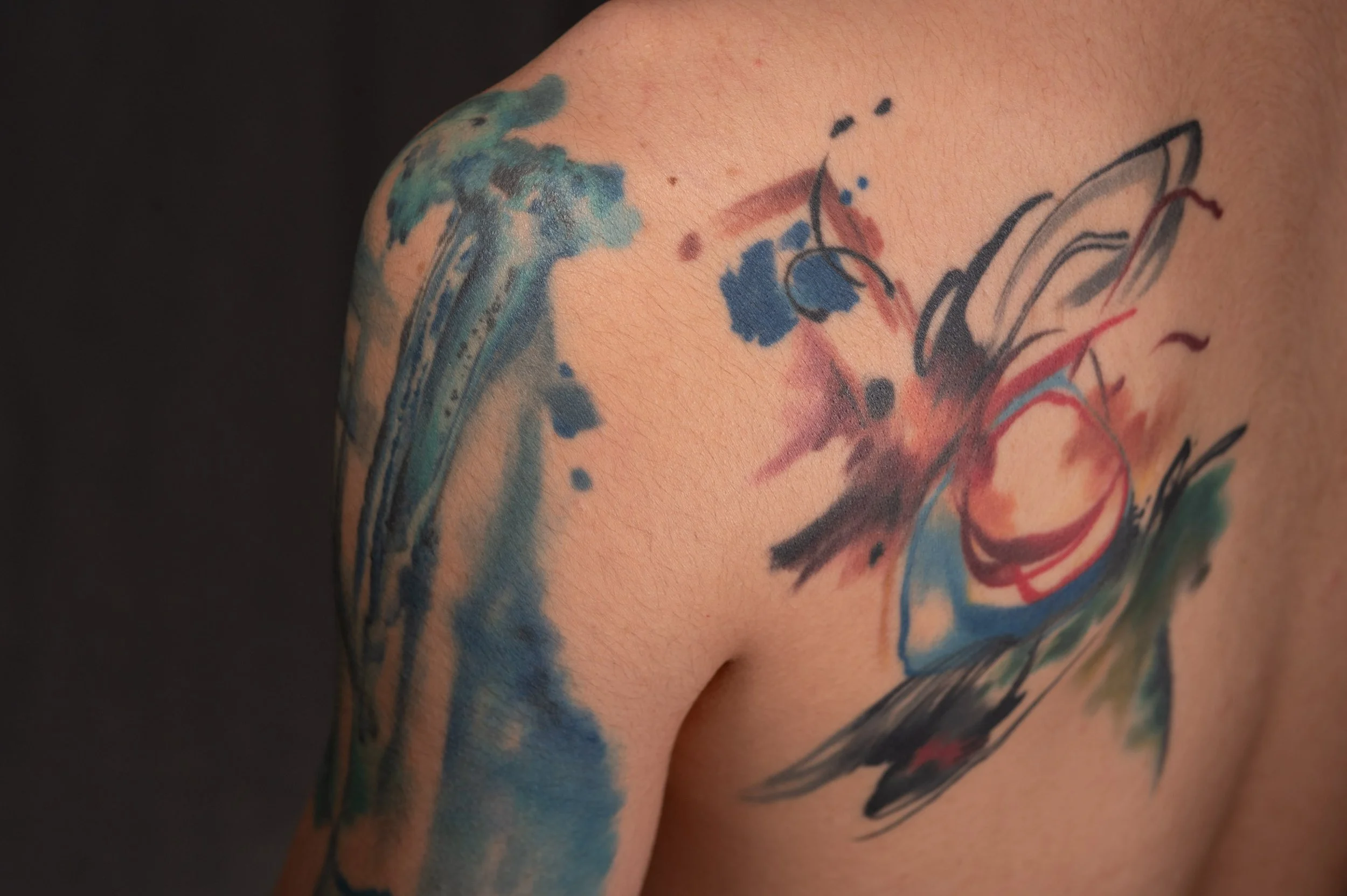
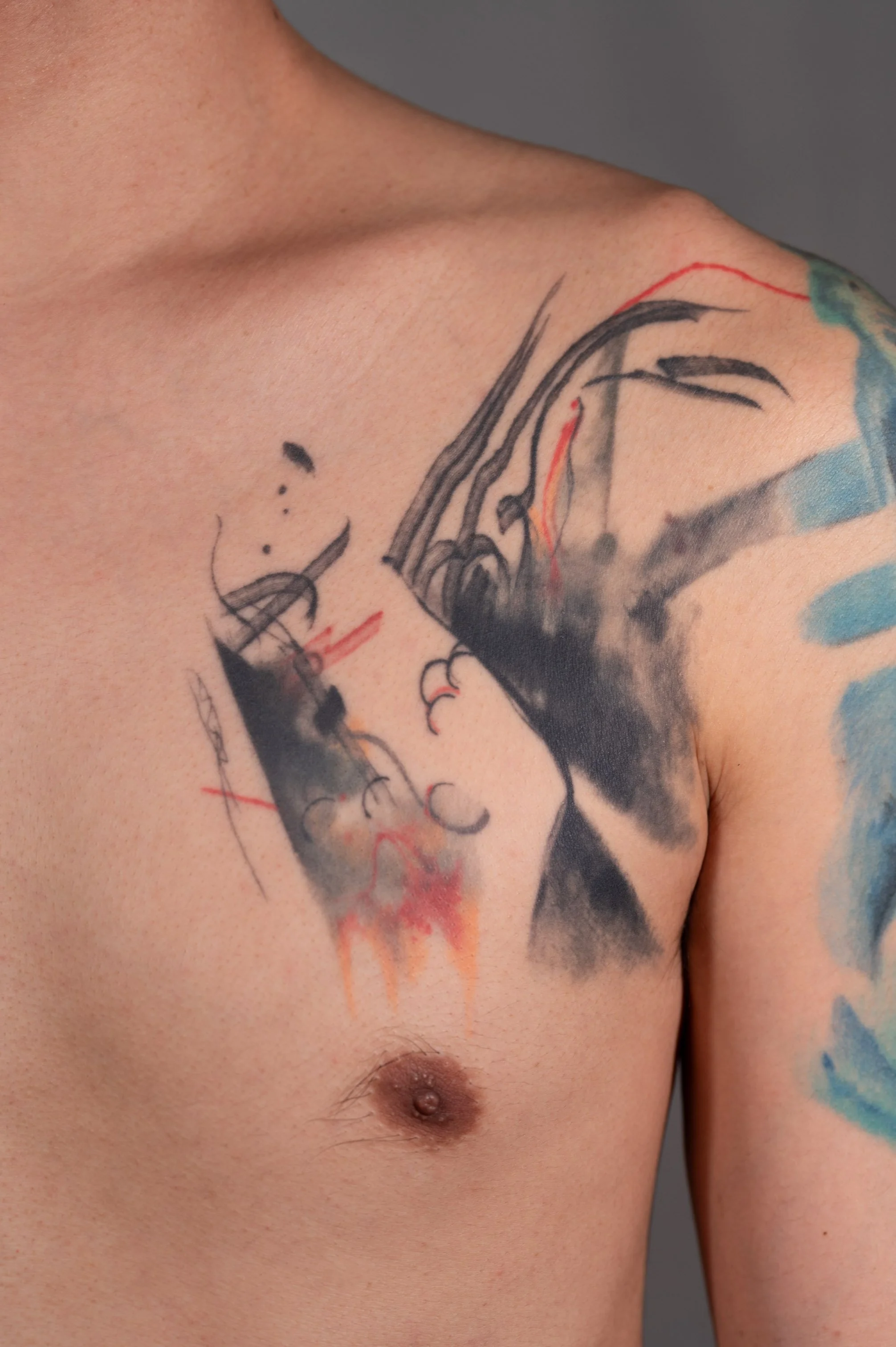
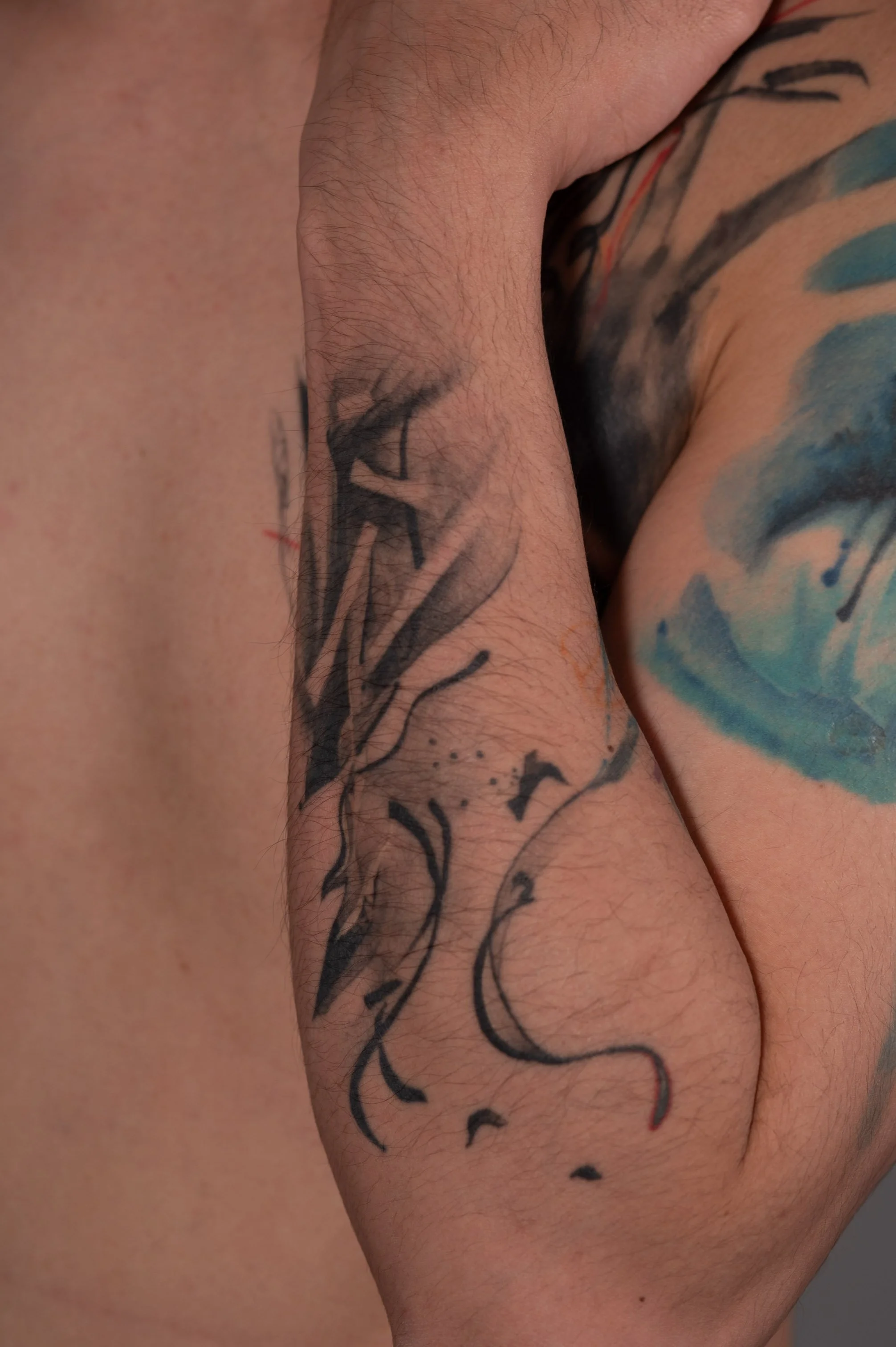
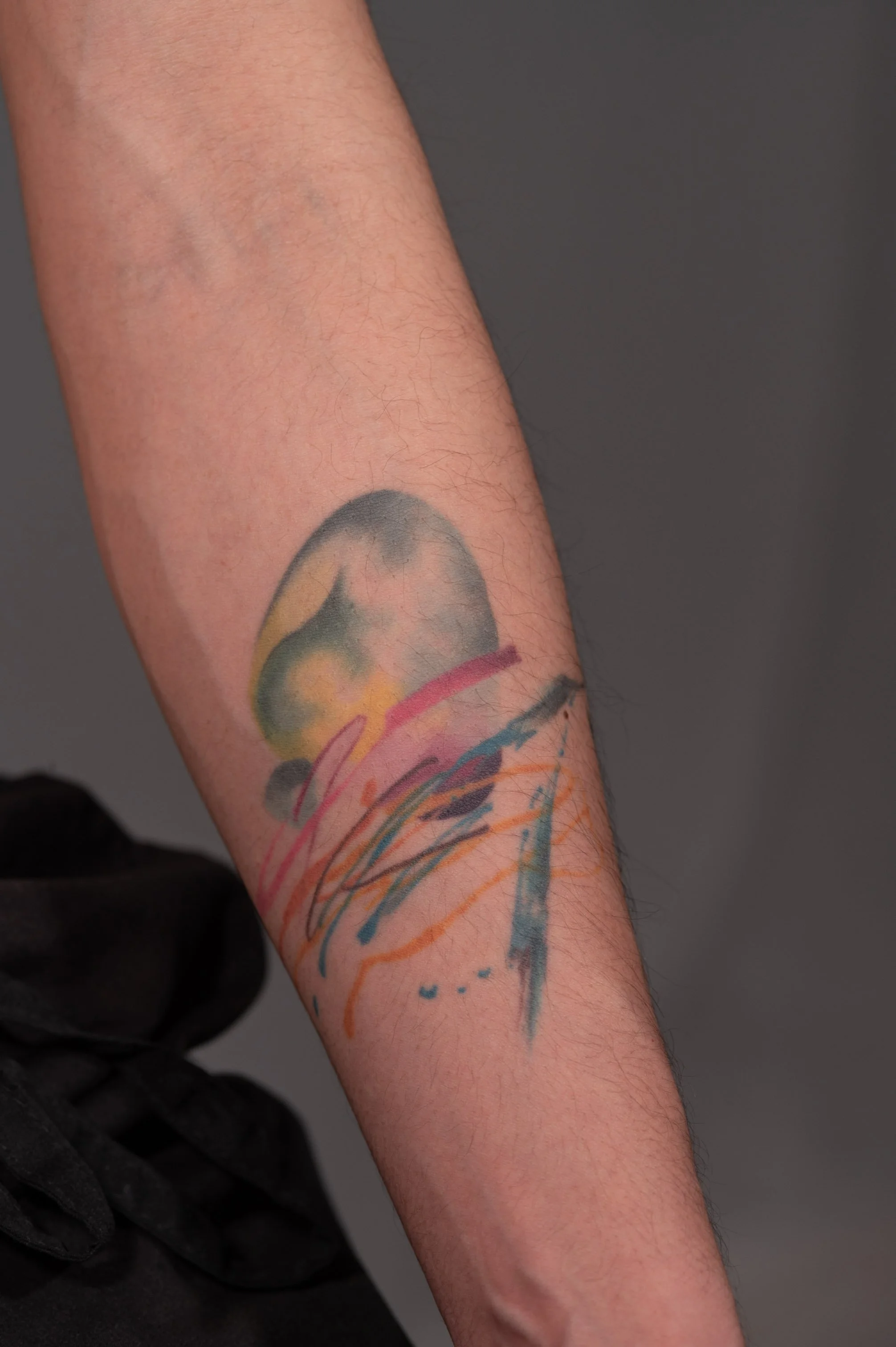
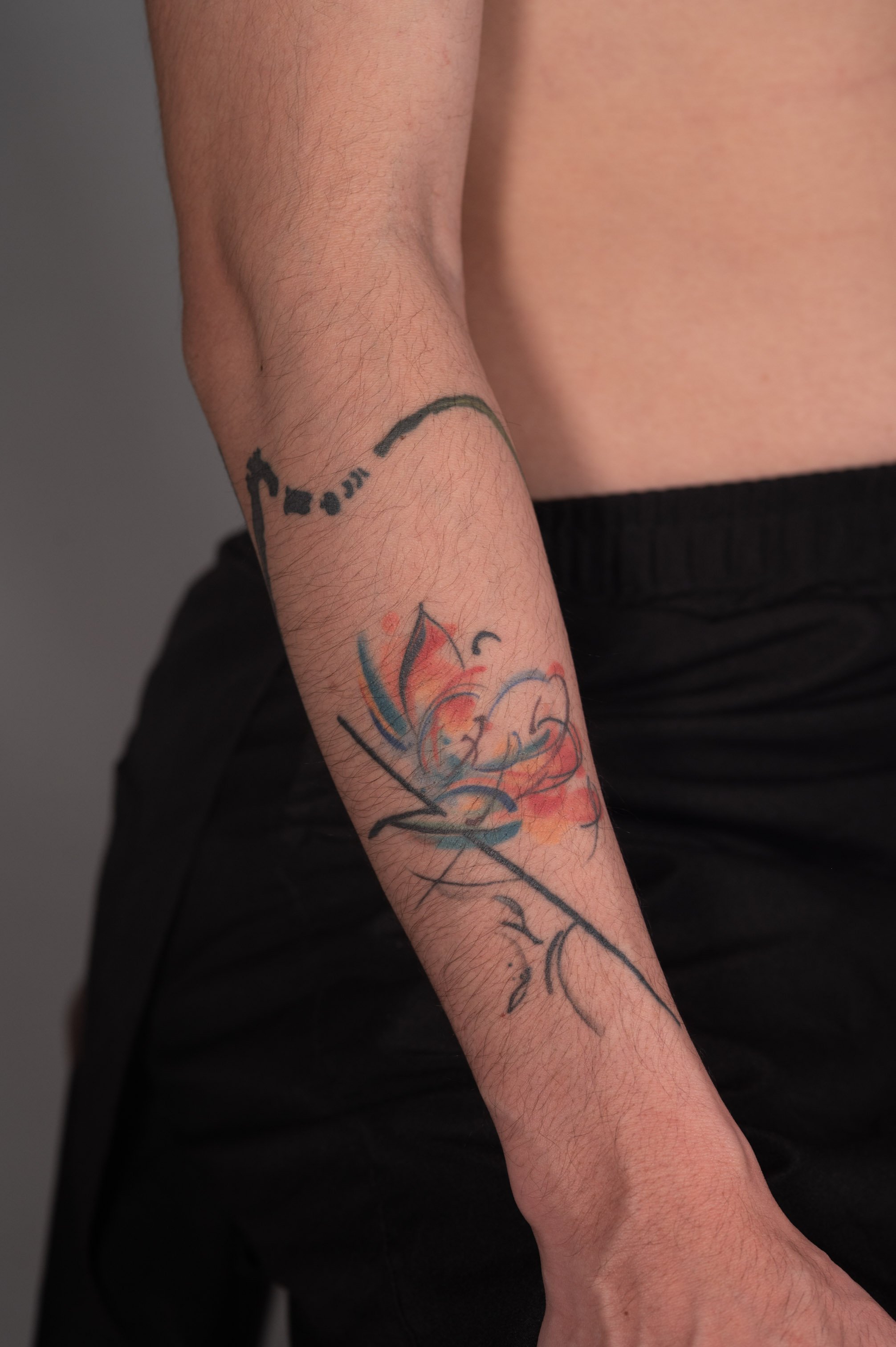
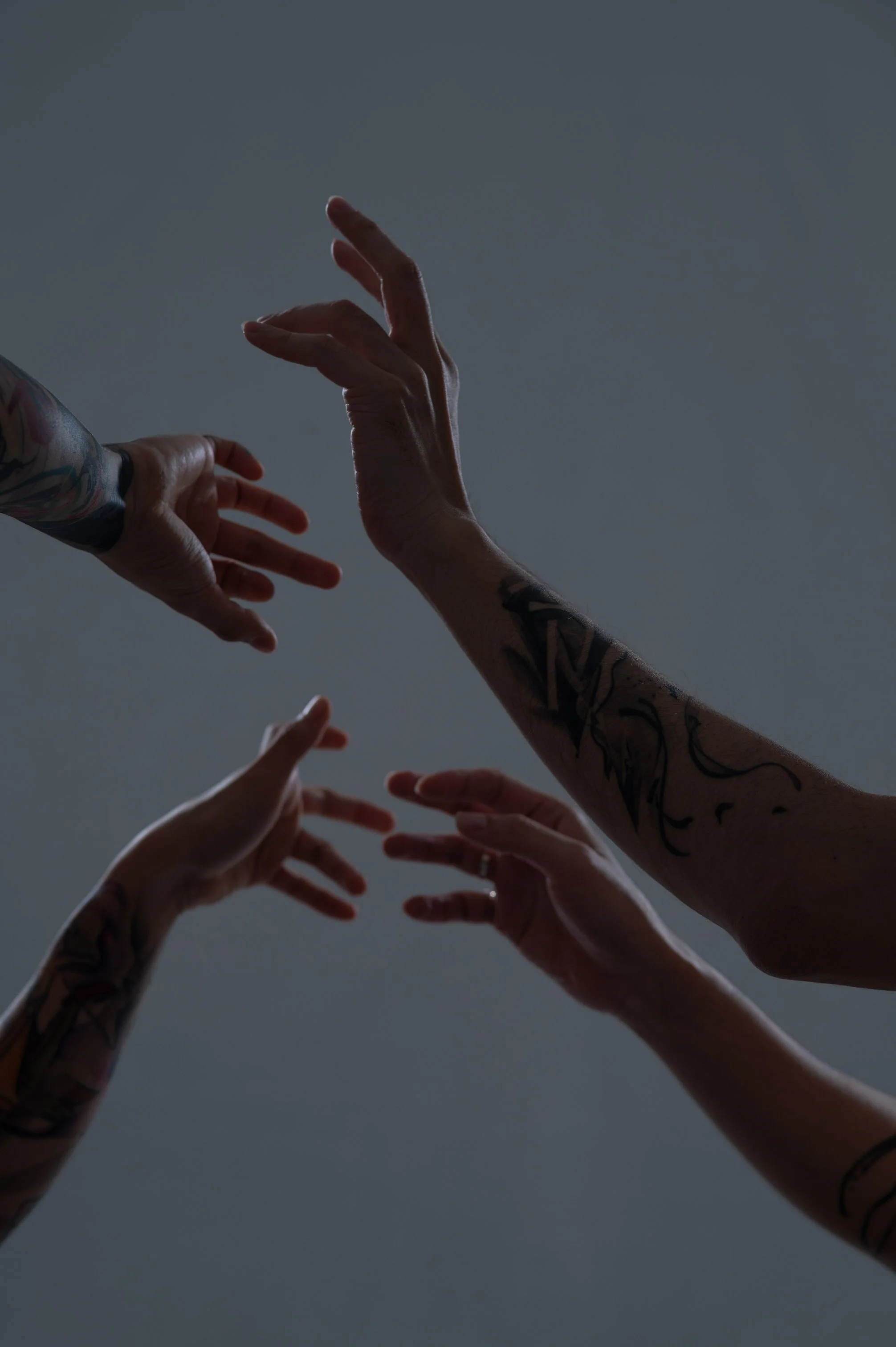
From 2016 to 2024, Kenson paid me a visit once a year. He always had his end of year conclusion tattoo with me. To summarise how he had evolved and what was important to him that year. In the first few years, he would describe the events and changes to me in extensive writing, I then was to transform that into a tattoo for him. After a while, he started to learn pole dancing, as a straight married male, hoping to explore and break gender stereotypes. For a few years, he would send me a dance video of himself, and I would watch it over and over again to condense it into a tattoo for him that year. It was a new experience for me, exciting. In those years, I’ve watched Kenson grow in both dancing techniques and his priorities in what was important to him, eventually placing self-expression over perfecting techniques as an amateur dancer. That lead me into some experimental state when I tattooed him, as a professional tattoo artist.. Usually, I prioritise tattoo techniques; to create a technically sound tattoo means a tattoo that would last long is usually at a very high priority in my work. Kenson has lead me into new territory each year, experimenting the balance between being in the flow while free-handing some/ part of his tattoos, a permanent mark, and entrusting myself that my muscle memory would follow through to create a technically sound enough tattoo. There was one year in particular that I even let go of that priority, and simply let his dance video replay over and over again while I tattoo him, completely freehanded the tattoo, guided by the mood, and set no technical standard consciously. It was a rather daring and scary moment for me to let go of that. I was not so sure on how to rate my own work after I was done, it felt strongly that it was a result of behavioural art more than a tattoo design. But it felt right for Kenson that year.
After a few years of those dance videos, Kenson spent less time dancing, and explored life in a more free-form way. His requests for the annual tattoo become a relationship to time. He would send me voice recording of how he has been that year, and told me that he started to think that tattoos seem to hurt more over the years, or at least he didn’t seem to have the mental state it takes to sit as long as he used to for a tattoo. So he would gently asked if we can do the tattoo within 2 hours that year. By now, we have grown together as people (we are the same age) and as artists, I no longer had high stress when I tattoo him. It was all very natural. I delivered his annual tattoos within the time frames he set always extremely precisely.
In 2024, Kenson told me that he thought that would be last year for him to get an” annual tattoo”. I saw that coming. I’ve watched him become less and less bounded by forms, that he didn’t feel the need to break rules to feel free anymore. I smiled at him and told him so, he smiled back.
Thank you for sharing growth with me for a decade. It is truly an honour and such a great self reflection and learning experience.